NVIDIA's Open Robotics Platform: How AI Is Learning to Control Real Robots
From virtual training to real-world tasks, discover how NVIDIA is helping developers build robots that can see, learn, and act.
Read More
Explore NVIDIA's new AI models, their technical capabilities, and what they could mean for businesses, developers, and creators.
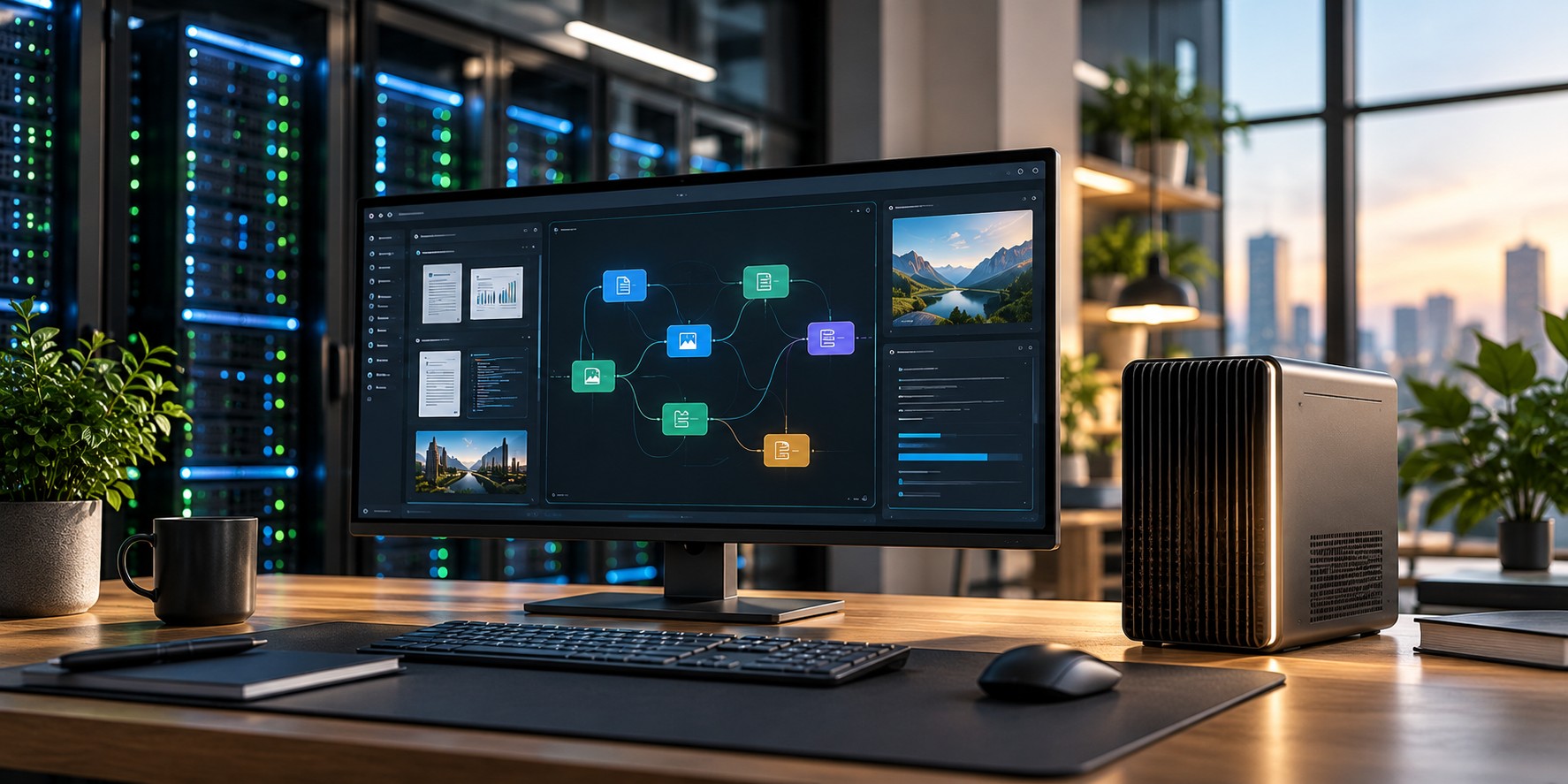
What if an AI assistant could review a stack of documents, compare information across different files, use software tools, and prepare a report without sending every request to a remote AI service?
This is the kind of workflow NVIDIA wants to support with its latest Nemotron 3.5 models. Announced in October 2026, the release includes a large multimodal model for complex AI agents and smaller models designed for local computing.
The announcement is interesting for two reasons. First, NVIDIA is pushing AI beyond simple question-and-answer chatbots. Second, it is making a stronger case for running some AI workloads on hardware controlled by businesses and individual users.
But the model names and technical numbers only tell part of the story. The more useful question is what these models can do, what hardware they need, and when a business or developer might actually choose them.
Most people know AI through chatbots. You enter a question, the model generates an answer, and you decide what to do next.
AI agents are designed to take the process further. Given the right tools and permissions, an agent can work through multiple steps, use software, examine documents, gather information, and produce an output. Some systems can also check their own work or try another approach when a step fails.
Imagine asking an AI system to prepare a supplier comparison. Instead of simply telling you how to compare suppliers, an agent might be able to read the files you provide, extract prices and terms, organize the information in a table, and prepare a summary for you to review.
That is the difference between an AI tool that gives advice and a system designed to help complete a workflow.
It is not fully automatic intelligence, though. Agents can misunderstand instructions, select the wrong information, or make mistakes when using tools. Important actions still need appropriate permissions, checks, and human oversight.
NVIDIA's October release covers three different use cases rather than one model intended for every situation. The models are Nemotron 3.5 Super VL, Nemotron 3.5 Bolt 74B-A9B 24GB, and Nemotron 3.5 Bolt E4B 4GB.
| Model | Published model size | Primary focus |
|---|---|---|
| Nemotron 3.5 Super VL | 120B total parameters; 12B active per token | Multimodal enterprise agents and complex workflows |
| Nemotron 3.5 Bolt 74B-A9B 24GB | 74B total parameters; 9B active parameters | Local agent tasks, tool use, and multistep reasoning |
| Nemotron 3.5 Bolt E4B 4GB | Small model in the 4B class | Lightweight conversational and device-based agents |
The figures and intended uses above come from NVIDIA's model announcements. The parameter count is not the same as the amount of computer memory a model requires, and it should not be used alone to predict performance.
Super VL is designed for demanding workloads involving text and visual information. Bolt 74B-A9B targets local agent tasks where speed and available memory matter. Bolt E4B is intended for smaller conversational experiences.
This approach gives developers different options depending on the task, available hardware, and deployment requirements.
Source: NVIDIA's official Nemotron 3.5 announcement.
One technical detail in the Super VL announcement deserves a closer look. NVIDIA describes it as a 120-billion-parameter model with approximately 12 billion parameters active per token.
This is possible because the model uses a mixture-of-experts architecture. In simple terms, the system contains different groups of model components, and only selected parts are activated for a particular token.
Think of it like a large team with people who specialize in different areas. The organization may have many specialists available, but a particular task only needs some of them. A mixture-of-experts model follows a related idea inside its neural network.
Using fewer active parameters per token can improve computational efficiency compared with activating the entire model for every token. However, the full model still needs to be stored or otherwise made available to the inference system, and the actual memory requirement depends on factors such as quantization and deployment configuration.
This distinction matters when comparing AI models. A model with fewer active parameters is not automatically smaller to install, easier to deploy, or better at every task.
NVIDIA says Nemotron 3.5 Super VL can deliver up to five times the throughput of other open models in its size category on selected agentic tasks.
Throughput describes how much work a system can process over a period of time. It is different from the time one individual user waits for a response, and it is not a universal score for every type of task.
The company also reports improvements from its inference and deployment optimizations. For example, NVIDIA says a particular NVIDIA Dynamo configuration can serve up to eight times as many users while reducing latency by 85% under its stated test conditions.
These numbers should be read in context. They describe NVIDIA's reported results under particular configurations, workloads, and comparison setups. They do not mean every Nemotron application will automatically be five times faster or that every deployment will achieve the same user capacity.
For businesses, the useful questions are more specific:
A model that generates text quickly but repeatedly makes errors may be less useful than a slower model that completes the task correctly.
Consider a company that receives invoices, purchase orders, and supplier statements every week. Employees must check the documents, compare totals, identify missing details, and prepare information for the finance team.
A suitably configured AI agent could help with parts of this process:
A multimodal model such as Nemotron 3.5 Super VL is designed for workloads involving documents and visual information, which makes this a relevant type of use case to evaluate.
That does not mean the model can be installed and trusted with the entire finance process without additional work. A real deployment needs document access controls, validation rules, audit logs, secure handling of financial information, and a person responsible for reviewing exceptions.
The best starting point is a narrow task with measurable results. For example, a company could test whether the system extracts invoice fields accurately before allowing it to take on more complicated work.
NVIDIA's Bolt models are designed to bring certain AI agent capabilities to local hardware. That is useful, but local AI is not automatically the best choice for every application.
| Consideration | Local AI | Cloud AI |
|---|---|---|
| Data control | Can keep processing within a controlled local environment | Data is processed according to the provider's service and configuration |
| Hardware | Requires compatible local computing resources | Provider supplies the underlying computing infrastructure |
| Maintenance | Your team may manage deployment, updates, and monitoring | The provider manages much of the underlying service |
| Connectivity | Can support offline or network-restricted use when configured for it | Usually requires access to the hosted service |
| Scaling | Depends on available devices and infrastructure | Can scale through the provider, subject to service limits and cost |
Local deployment can be attractive when data control, offline access, or predictable access to dedicated hardware is important. Cloud services can be more convenient when a team needs to get started quickly or handle workloads that exceed its own equipment.
There is also a middle ground. Some applications can use a small local model for routine requests and send more demanding tasks to a hosted model.
Privacy is not guaranteed simply because a model runs locally. Applications still need to manage logs, stored files, permissions, backups, and access to connected tools carefully.
NVIDIA describes its Nemotron models as open models and provides model resources intended to support evaluation, customization, and deployment.
Open weights allow developers to obtain a model's trained parameters under the applicable license. Depending on the specific release, supporting resources may include datasets, training recipes, and technical reports.
This can give a development team more control over where a model runs and how it is adapted to a particular workflow. A company might customize an agent for its own document formats, terminology, internal procedures, or evaluation criteria.
But open weights do not automatically mean unrestricted use. Developers should check the actual model license and any conditions that apply to commercial deployment, redistribution, or modification.
They should also consider the full cost of running the model, including hardware, engineering, monitoring, security, and maintenance. Having access to model weights is only one part of building a reliable AI application.
Content creation is another area where AI tools are becoming part of a larger workflow. A creator may research a topic, write a script, generate a voiceover, prepare visuals, edit the video, and add captions before publishing.
AI agents could eventually help coordinate more of these steps, particularly when the tasks involve collecting information, organizing files, or passing work between tools. The exact level of automation depends on the software integrations and permissions available.
Generating the narration is a separate task that creators can already handle with text-to-speech tools. For example, AiVOOV's YouTube voiceover generator can turn a written script into audio for a video.
Creators can then combine the narration with their own footage, screen recordings, images, captions, and editing. AiVOOV offers more than 2,300 AI voices across 155+ languages and accents, which can be useful when preparing content for different audiences.
The distinction is important: an underlying AI model, an AI agent that coordinates tasks, and a dedicated voiceover application are different parts of the technology landscape. They may work together, but they solve different problems.
If you're considering Nemotron 3.5 for a project, don't make the decision based on a benchmark headline alone. Run a small evaluation using the kind of tasks you actually want the system to handle.
Testing a small, clearly defined workflow is often more useful than trying to automate an entire department at once.
For the most accurate model details, start with NVIDIA's own technical materials. The official announcement describes the intended workloads, availability, and performance claims for the new models.
You can read the NVIDIA Nemotron 3.5 announcement for an overview of Super VL and Bolt. Developers can also explore the NVIDIA Nemotron model collection for model information and deployment resources.
Before building a production application, review the specific model card, license, hardware requirements, and current technical documentation. Model availability and supported deployment options can change as new releases arrive.
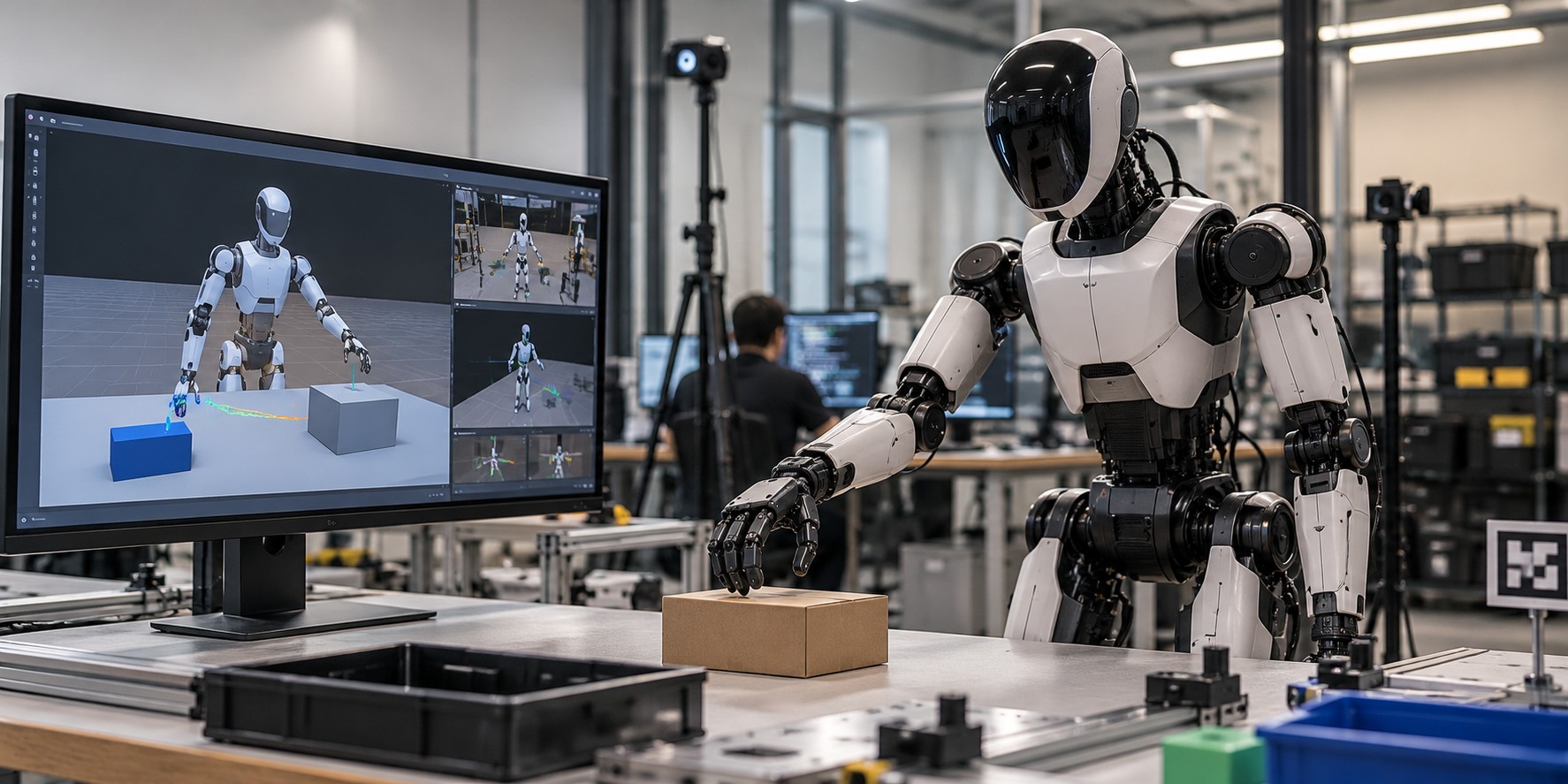
From virtual training to real-world tasks, discover how NVIDIA is helping developers build robots that can see, learn, and act.
Read More
Create engaging YouTube videos with AI narration, visuals, and captions—without recording your own voice.
Read MoreWhat are you waiting for?
Create your account to generate realistic text-to-speech (TTS) audio with our online AI voice generator.
Try for Free