Exploring the Benefits of Multilingual AI Voice Solutions for Global Businesses
Reaching global audiences just got easier with Ai voice solutions
Read More
Explore the voice AI developments shaping content creation, accessibility, and multilingual communication.
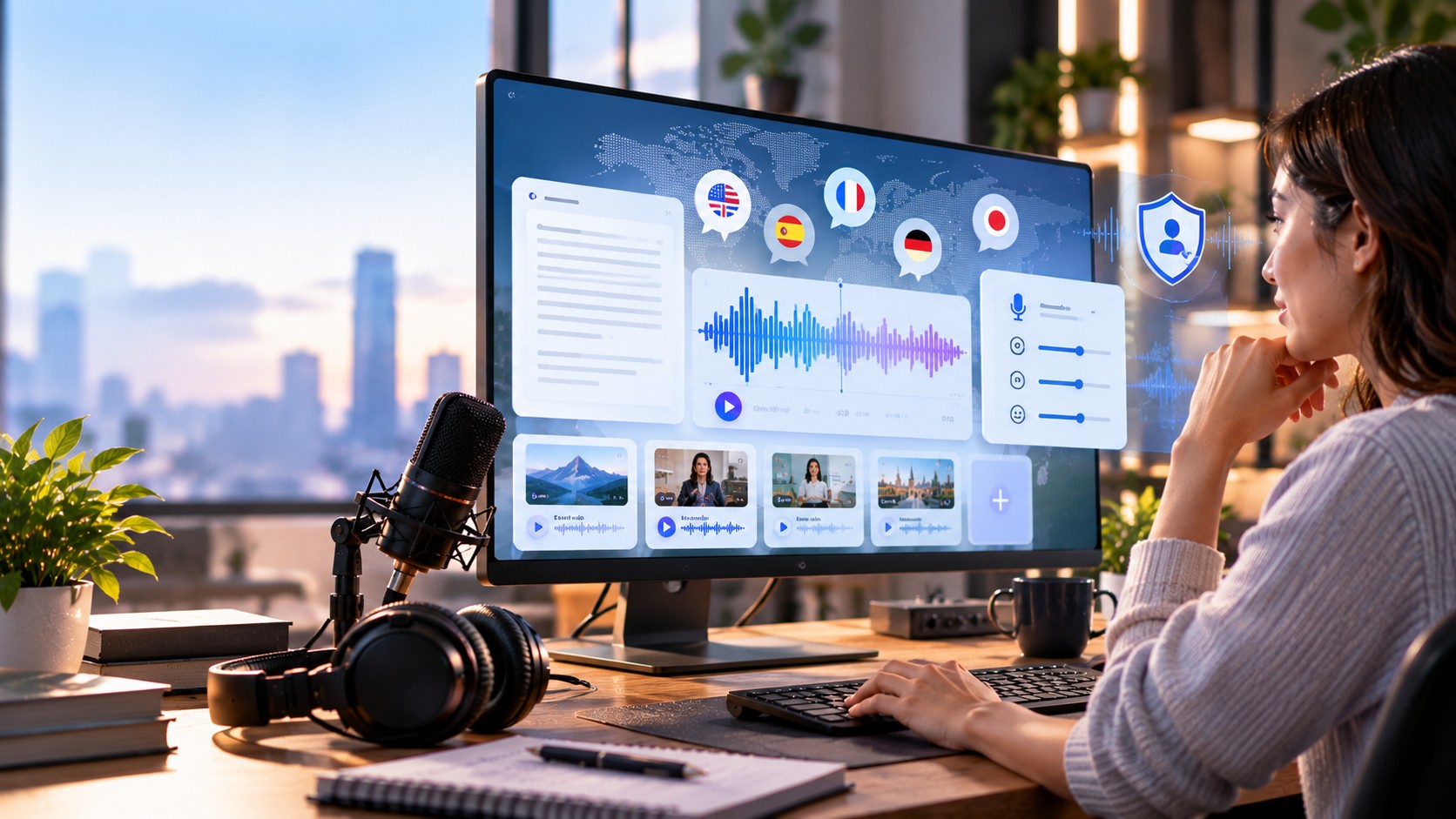
Explore the voice AI developments shaping content creation, accessibility, and multilingual communication.
Voice is becoming an increasingly important part of how people experience digital content. From narrated videos and online lessons to product demonstrations and audio versions of written material, speech gives creators another way to communicate with their audiences.
At AiVOOV, we see text-to-speech as more than a way to turn words into audio. It is part of a broader content workflow that helps people create narration, reach audiences in different languages, and update audio when their content changes.
As we look toward 2027, several developments deserve attention: more expressive speech, better control over delivery, multilingual production, personalized audio experiences, accessibility, and responsible use of synthetic voices.
Some of these capabilities are already available in today's tools, including features on our platform. Others are emerging directions whose adoption and impact will depend on future technical progress, user expectations, and industry practices.
The opportunity goes beyond generating a voice. It is about creating audio that fits the content, audience, language, and purpose.
Turn scripts and written material into speech.
Refine pronunciation, pacing, pauses, and delivery.
Prepare narration for different languages and audiences.
Deliver audio through the channels your audience uses.
An illustrative content workflow, not a prediction of a fixed industry standard.
Trend 01
Speech is not just a sequence of correctly pronounced words. The way a sentence is delivered can change how listeners understand and respond to it. A product introduction may need an energetic tone, while an educational explanation may benefit from a calmer, more measured delivery.
AI speech technology is moving toward more expressive output, with greater attention to intonation, emphasis, pauses, and emotional delivery. The next stage is not simply making voices sound more human; it is making their delivery more appropriate for the context.
Our platform offers speech styles and controls for voice inflections, including rate, pitch, emphasis, and pauses. These options help you shape narration to fit your content instead of relying on a single delivery style for every project.
Trend 02
A video created for one market may also be useful to audiences in other countries. The challenge is producing localized versions without turning every update into an entirely new recording project.
Multilingual text-to-speech can help creators prepare audio in different languages. However, useful localization involves more than replacing words. Pronunciation, local expressions, names, measurements, and cultural context all influence whether a voiceover feels suitable for its intended audience.
| Content type | Localization opportunity | What to review |
|---|---|---|
| Product tutorials | Provide spoken instructions in additional languages. | Product names, interface labels, and technical vocabulary. |
| Online courses | Prepare narration for learners in different regions. | Terminology, examples, and instructional clarity. |
| Marketing videos | Adapt campaign narration for different audiences. | Local phrasing, tone, pronunciation, and timing. |
| Business presentations | Make information available to multilingual teams. | Names, dates, measurements, and business terminology. |
AiVOOV provides access to more than 2,300 AI voices across 155+ languages and accents, according to our current platform listing. You can explore the available options and create narration for different language requirements from one platform. Actual voice availability varies by language and voice selection.
Trend 03
Generating speech is only part of creating a reliable voiceover. A single incorrectly pronounced brand name or unclear technical term can undermine an otherwise useful recording. This becomes particularly important for training content, software tutorials, product demonstrations, and business communication.
We expect fine-grained speech control to remain an important area of development. Creators need practical ways to adjust the delivery of specific passages without having to rewrite an entire script or accept the first generated result.
Original script:
"Welcome to our platform. Today, we'll explain how to configure your workspace and manage your projects."
What to review during generation:
At AiVOOV, custom pronunciations, preview tools, voice inflections, and SSML support give users ways to refine generated speech. The available controls depend on the voice and generation workflow.
Trend 04
Digital content is often created for audiences with different levels of experience, interests, and communication needs. A beginner may need a detailed explanation, while an experienced user may prefer a shorter overview.
As content workflows become more adaptable, creators may increasingly produce different versions of the same material. These could include a short summary, a longer explanation, a version in another language, or narration suited to a different audience.
Personalization does not always require a voice that knows everything about the listener. In many cases, it begins with something straightforward: producing the right script, in the right language, at the right level of detail.
Our text-to-speech workflow lets you generate new audio when a script changes. You can create alternative narration, explore different available voices, and organize audio for different projects without having to record each version manually.
Trend 05
Not everyone prefers to consume information by reading a screen. Audio can help people access written material while commuting, working through a task, or using a device in situations where reading is inconvenient. It can also provide an additional way to engage with digital content.
Text-to-speech can contribute to more accessible experiences when it is implemented thoughtfully. Websites, educational resources, and digital publications can offer audio alternatives that give users greater flexibility in how they consume information.
| Content | Potential benefit | Implementation consideration |
|---|---|---|
| Articles and guides | Let readers listen instead of relying exclusively on visual reading. | Keep audio synchronized with the current written content. |
| Educational resources | Offer an additional way to review lessons and instructions. | Use clear narration and explain important terms. |
| Digital products | Provide spoken explanations of selected information. | Ensure controls are usable and do not replace other accessibility features. |
| Multilingual websites | Offer audio in languages that match the intended audience. | Review translation quality and pronunciation before publication. |
At AiVOOV, you can create audio from written content and use our audio player and sharing options where appropriate. Adding narration is one part of accessibility, not a complete substitute for accessible design, captions, keyboard navigation, or other assistive features.
Trend 06
Content production rarely ends when audio is generated. Creators may still need to edit clips, add background music, prepare subtitles, combine files, publish a podcast, or embed an audio player on a website.
This makes workflow integration an important area to watch. Rather than treating speech generation as an isolated task, creators increasingly need tools that help them move from a script to usable, organized, publishable audio.
Write, paste, or import your source material.
Select voices and produce the narration.
Preview and improve the audio.
Keep files and project assets organized.
Download audio in a supported format.
Use the audio in your chosen content channel.
AiVOOV already offers several tools for this broader workflow, including project management, MP3/WAV export, audio merging, SRT generation, podcast hosting, background music, and audio player options. The specific tools you need depend on the project you're producing.
Trend 07
As synthetic speech becomes more capable, the question of trust becomes more important. AI-generated audio can be used for legitimate narration and accessibility, but synthetic voices can also be misused to impersonate people or mislead listeners.
Responsible voice generation involves more than technical quality. Consent, appropriate permissions, transparent communication, and careful handling of voice data all matter. Organizations using synthetic voices should consider these questions before deploying audio in customer-facing or sensitive situations.
AI voice technology should help people communicate more effectively, not make impersonation or deception easier. As you create audio with AiVOOV, make sure your use of voices and generated content respects the rights of others and the rules that apply to your project.
The tools and regulations surrounding synthetic audio may continue to change through 2027. Businesses should monitor applicable requirements rather than assume one disclosure or consent practice is sufficient for every situation.
You don't need to wait for future developments to improve your voiceover process. A few practical habits can help you get more from the tools available today.
Use concise sentences, consistent terminology, and punctuation that supports natural speech. Good source text makes review and editing easier.
Preview a representative passage rather than selecting a voice based only on its description. Check pronunciation, pacing, and tone.
Organize scripts, audio clips, and project files so you can revise or reproduce content when your message changes.
Decide which audiences need localized content and review each version for pronunciation, terminology, and cultural fit.
Listen to the full output, check important words, and confirm that the final audio is suitable for the intended channel and audience.
Technology predictions are most useful when they are separated from existing capabilities. Here's how the trends discussed in this article relate to practical text-to-speech work.
| Area | Available with AiVOOV today | Potential direction to watch |
|---|---|---|
| Expressive speech | Available speech styles and voice controls. | More context-sensitive and nuanced delivery. |
| Multilingual production | A voice library covering many languages and accents. | More adaptable localization and smoother multilingual workflows. |
| Pronunciation control | Custom pronunciations and SSML support. | More precise and convenient control for complex scripts. |
| Content variation | Generate and revise audio from different scripts and voices. | More tailored versions for different content needs and audiences. |
| Audio workflows | Export, project management, and other audio-production features. | More connected production and publishing workflows. |
| Trust and transparency | Users can apply responsible practices when creating and publishing audio. | Further adoption of provenance, consent, and synthetic-media transparency practices across the industry. |
The final column contains forward-looking possibilities, not promises about specific product releases or guaranteed industry outcomes. Current feature availability may vary by voice, account, and workflow.
Important areas to watch include expressive speech, better pronunciation controls, multilingual content production, personalized audio, accessibility, connected content workflows, and responsible use of synthetic voices. These are trends to monitor rather than guaranteed outcomes.
Continued improvements in speech generation are a reasonable expectation, but results will vary by model, language, voice, and script. Naturalness also depends on pronunciation, pacing, context, and how well the delivery suits the content.
AiVOOV offers speech styles and controls for voice inflections, such as rate, pitch, emphasis, and pauses. These features help users refine narration for different content types. Available controls depend on the selected voice and workflow.
Yes. Our platform lists more than 2,300 AI voices across 155+ languages and accents. You can explore the available options to find voices for your intended audience. Voice availability and regional coverage vary.
Audio versions of written content can give users another way to access information. However, text-to-speech should complement rather than replace other accessibility practices, including readable content, captions, keyboard support, and accessible controls.
AI-generated voice can be used in many commercial workflows, but you should check the terms that apply to your tool, account, voice, and project. Obtain necessary permissions, avoid deceptive impersonation, and review applicable laws and platform rules.
AI voice generation can help with repeatable narration, localization, and projects that require frequent revisions. Human voice actors remain valuable for performances requiring distinctive interpretation, nuanced acting, and creative direction. The best choice depends on the project's goals, budget, and expectations.
You can start by preparing a short script, exploring available voices, generating a sample, and reviewing the pronunciation and delivery. With AiVOOV, you can refine the audio and use the supported export and project features to fit your production workflow.
The future of text-to-speech will involve more than generating audio. It will also be about choosing the right voice, refining delivery, reaching different audiences, and making audio part of a practical content workflow.
You can start exploring these possibilities today with AiVOOV. Create narration for videos, podcasts, educational resources, presentations, and other projects using the voices and features available on our platform.
Explore our features or browse the AI voice library to find the right starting point for your next project.

Reaching global audiences just got easier with Ai voice solutions
Read More
Top 10 AI Tools for Content Creation in 2025 | Boost Productivity with AI
Read MoreWhat are you waiting for?
Create your account to generate realistic text-to-speech (TTS) audio with our online AI voice generator.
Try for Free